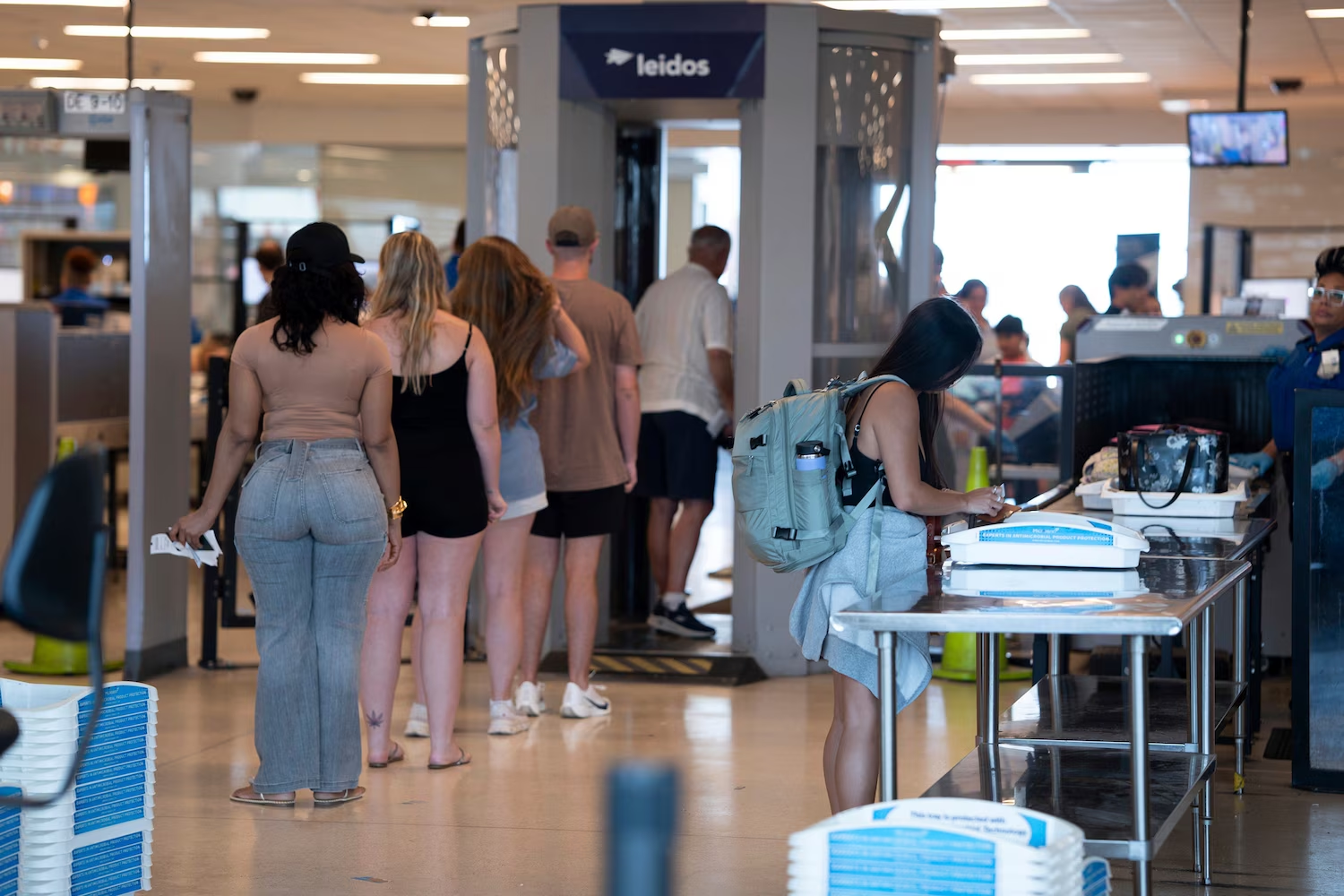


Air travelers in the United States must follow specific security rules when carrying liquids through airport checkpoints. One of the most important and widely misunderstood guidelines is the TSA liquid rule, commonly referred to as the TSA 3-1-1 rule.
- What Is the TSA Liquid Rule?
- The TSA 3-1-1 Rule Explained
- Liquids Allowed in Carry-On Bags
- Liquids Not Allowed Through TSA Security
- TSA Liquid Exceptions Travelers Should Know
- Liquids Allowed in Checked Bags
- What Counts as a “Liquid” According to TSA?
- Common Mistakes Travelers Make With Liquids
- Tips for Packing Liquids for Airport Security
- TSA Liquid Rules for International Travelers
- Frequently Asked Questions About the TSA Liquid Rule
- Can you bring water through TSA?
- Can you bring toothpaste on a plane?
- Does mascara count as a liquid?
- Can you bring perfume in your carry-on?
- Can you bring alcohol in carry-on luggage?
- What happens if you bring too much liquid?
- Can you bring snacks like peanut butter or yogurt?
- Are baby liquids screened differently?
- Can you bring medication liquids in carry-on bags?
- Are travel-size containers required?
- Final Thoughts: Understanding TSA Liquid Rules
Understanding this rule helps travelers avoid delays, prevent confiscation of personal items, and pass through airport security smoothly. Whether you are a first-time flyer, a frequent traveler, or an international visitor flying within the United States, knowing exactly what liquids you can bring in your carry-on bag is essential.
This guide explains the TSA liquid rule in detail, including allowed items, prohibited liquids, common mistakes, packing strategies, and special exceptions.
What Is the TSA Liquid Rule?
The TSA liquid rule restricts how much liquid passengers can bring through airport security in carry-on luggage. The rule was introduced to enhance aviation security by limiting the quantity of liquids that could potentially be used to create harmful substances.
The rule applies to all passengers departing from U.S. airports and affects items carried through the security checkpoint.
📊 Basic TSA Liquid Rule
| Rule Element | Explanation |
|---|---|
| 3.4 oz | Maximum container size allowed |
| 1 quart bag | Liquids must fit in a clear quart-size bag |
| 1 bag | Each passenger can bring one bag |
These limits apply only to carry-on luggage. Larger liquid containers are allowed in checked baggage.
The rule is often summarized as 3-1-1, making it easier for travelers to remember.
The TSA 3-1-1 Rule Explained
The TSA 3-1-1 rule breaks down into three components. Understanding each one ensures your liquids comply with airport security guidelines.
📊 TSA 3-1-1 Rule Breakdown
| Component | Meaning |
|---|---|
| 3 | Containers must be 3.4 ounces (100 ml) or smaller |
| 1 | All containers must fit inside one quart-size bag |
| 1 | Each passenger is allowed one bag |
Important details include:
- Containers larger than 3.4 ounces are not allowed, even if they are partially empty.
- The quart bag must be clear and resealable.
- Liquids must fit comfortably inside the bag.
Airport security officers may ask travelers to remove the bag from their carry-on during screening.
Liquids Allowed in Carry-On Bags
Many everyday personal care products are allowed in carry-on luggage if they follow the 3-1-1 rule.
📊 Common Liquids Allowed in Carry-On
| Item | Allowed? |
|---|---|
| Shampoo | Yes (3.4 oz or less) |
| Toothpaste | Yes |
| Lotion | Yes |
| Perfume | Yes |
| Liquid makeup | Yes |
| Contact lens solution | Yes |
| Mouthwash | Yes |
| Hand sanitizer | Yes |
Travel-size versions of these items are widely available and designed specifically for airline travel.
When packed correctly, these products should pass through security without issues.
Liquids Not Allowed Through TSA Security
Liquids exceeding the allowed container size will typically be confiscated during screening.
📊 Liquids Often Confiscated at TSA Checkpoints
| Item | Reason |
|---|---|
| Large water bottles | Container exceeds 3.4 oz |
| Full-size shampoo | Container too large |
| Oversized sunscreen | Exceeds liquid limit |
| Large beverages | Must be empty before security |
| Snow globes | Liquid volume unclear |
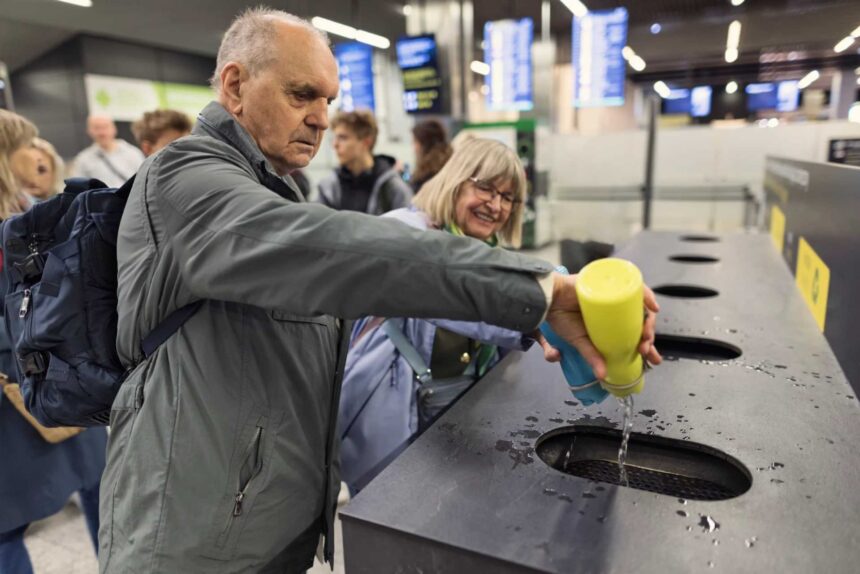
One of the most common mistakes travelers make is forgetting to empty water bottles before arriving at the checkpoint.
Fortunately, most airports provide water refill stations after security.
TSA Liquid Exceptions Travelers Should Know
Certain liquids are exempt from the 3-1-1 rule due to health or family needs.
📊 TSA Liquid Rule Exceptions
| Item | Exception Allowed |
|---|---|
| Baby formula | Allowed in larger quantities |
| Breast milk | Allowed |
| Liquid medications | Allowed |
| Medical liquids | Allowed |
| Liquid nutrition products | Allowed |
These items may require additional screening, but they are permitted even if they exceed the standard container size.
Passengers should inform the TSA officer about these items during the security process.
Liquids Allowed in Checked Bags
The TSA liquid rule mainly applies to carry-on luggage. Travelers placing liquids in checked baggage have fewer restrictions.
📊 Carry-On vs Checked Liquids
| Liquid Type | Carry-On | Checked Bag |
|---|---|---|
| Shampoo | 3.4 oz limit | Allowed full size |
| Drinks | Not allowed through security | Allowed |
| Alcohol | Limited | Allowed with restrictions |
| Lotion | Limited | Allowed |
| Perfume | Limited | Allowed |
Travelers transporting large quantities of liquids should place them in checked baggage to avoid confiscation.
What Counts as a “Liquid” According to TSA?
Many travelers assume that only drinks count as liquids. However, the TSA definition includes gels, creams, pastes, and aerosols.
📊 Items TSA Considers Liquids
| Item | Category |
|---|---|
| Toothpaste | Gel |
| Peanut butter | Spread |
| Mascara | Liquid cosmetic |
| Lip gloss | Liquid |
| Deodorant (gel) | Gel |
| Sunscreen | Lotion |
| Hair gel | Gel |
Even foods like peanut butter, yogurt, and hummus can be treated as liquids by security officers.
If an item can spread, pour, or spray, it will likely fall under liquid restrictions.
Common Mistakes Travelers Make With Liquids
Failing to follow the TSA liquid rule can lead to delays at security checkpoints.
📊 Frequent TSA Liquid Rule Mistakes
| Mistake | Consequence |
|---|---|
| Packing full-size toiletries | Confiscation |
| Carrying multiple quart bags | Not allowed |
| Forgetting liquids in backpack | Bag inspection |
| Carrying unopened beverages | Must discard |
| Packing liquids loosely | Spills during travel |
To avoid these problems, travelers should check their bags before arriving at the airport.
Tips for Packing Liquids for Airport Security
Packing liquids properly can make the security screening process faster and easier.
📊 Smart Packing Tips
| Tip | Benefit |
|---|---|
| Use travel-size containers | TSA compliant |
| Store liquids in clear bag | Faster screening |
| Place bag near top of carry-on | Easy removal |
| Use leak-proof bottles | Prevent spills |
| Label medication liquids | Avoid confusion |
Many experienced travelers keep a dedicated travel toiletry kit that is always TSA-compliant.
TSA Liquid Rules for International Travelers
International passengers departing from U.S. airports must follow the same TSA liquid rule.
📊 US vs International Liquid Limits
| Region | Liquid Limit |
|---|---|
| United States | 3.4 oz (100 ml) |
| European Union | 100 ml |
| United Kingdom | 100 ml |
| Canada | 100 ml |
| Australia | 100 ml |
These rules are largely standardized worldwide, meaning travelers can often pack the same way for international flights.
However, some airports may apply additional screening procedures.
Frequently Asked Questions About the TSA Liquid Rule
Can you bring water through TSA?
No. Full water bottles cannot pass through security. However, travelers can bring empty bottles and fill them after the checkpoint.
Can you bring toothpaste on a plane?
Yes. Toothpaste is allowed in carry-on luggage as long as the container is 3.4 ounces or smaller.
Does mascara count as a liquid?
Yes. Mascara is considered a liquid cosmetic and must follow the TSA 3-1-1 rule.
Can you bring perfume in your carry-on?
Yes. Perfume is allowed if the bottle is 3.4 ounces or smaller.
Can you bring alcohol in carry-on luggage?
Alcohol is allowed in small containers that follow the liquid rule. Larger bottles must be placed in checked baggage.
What happens if you bring too much liquid?
Security officers will ask passengers to discard the item before passing through the checkpoint.
Can you bring snacks like peanut butter or yogurt?
These foods are treated as liquids. They must follow the 3-1-1 rule.
Are baby liquids screened differently?
Yes. Baby formula and breast milk are permitted in larger quantities but may undergo additional screening.
Can you bring medication liquids in carry-on bags?
Yes. Medications are exempt from the liquid limit but must be declared to TSA officers.
Are travel-size containers required?
Containers must hold 3.4 ounces or less, but they do not need to be official travel-size packaging.
Final Thoughts: Understanding TSA Liquid Rules
The TSA liquid rule may seem restrictive at first, but it becomes easy to follow once travelers understand the 3-1-1 framework.
Remember these key principles:
- Liquids must be 3.4 ounces or smaller
- All containers must fit into one quart-size bag
- Each passenger is allowed one bag
By packing liquids carefully and knowing the exceptions, travelers can move through airport security quickly and avoid unnecessary delays.
For more detailed airport security guidance and travel planning tips, explore the full TSA information hub at:
👉 https://www.airportguideusa.com/category/tsa-and-security/
Understanding airport security rules in advance helps ensure a smoother and more stress-free travel experience for every passenger.