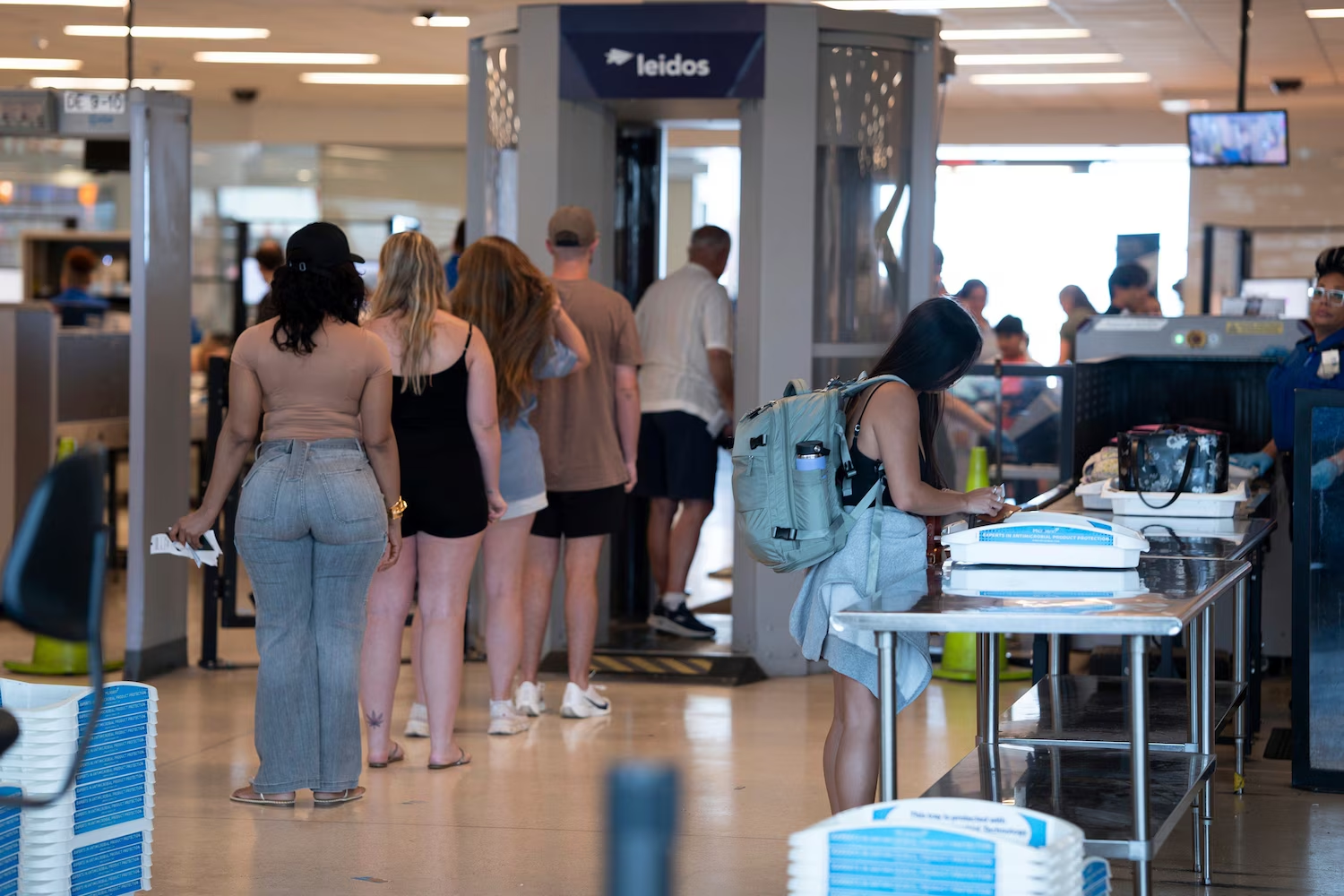



You are standing in a standard security line, shoes off, laptop out, watching PreCheck passengers breeze through a dedicated lane in under five minutes. This guide gives you everything you need to join them, from choosing an enrollment provider to entering your Known Traveler Number the right way so the indicator actually shows up on your boarding pass.
- Table of Contents
- What Is TSA PreCheck?
- Who Qualifies for TSA PreCheck?
- How to Apply for TSA PreCheck: Step-by-Step
- TSA PreCheck Enrollment Providers Compared
- How Much Does TSA PreCheck Cost in 2026?
- Credit Cards That Cover the TSA PreCheck Fee
- TSA PreCheck vs. Global Entry vs. CLEAR
- TSA PreCheck Touchless ID: The 2026 Upgrade
- How to Renew Your TSA PreCheck Membership
- FAQ
- Key Takeaways
Quick Answer / TL;DR
TSA PreCheck costs $76.75 to $85 for a five-year membership, depending on which enrollment provider you use. Apply online in about five minutes, then attend a 10-minute in-person appointment. Most applicants receive their Known Traveler Number within three to five business days. Add your KTN to every flight reservation to activate expedited screening. Many premium travel credit cards reimburse the fee entirely.
Table of Contents
- What Is TSA PreCheck?
- Who Qualifies for TSA PreCheck?
- How to Apply for TSA PreCheck: Step-by-Step
- TSA PreCheck Enrollment Providers Compared
- How Much Does TSA PreCheck Cost in 2026?
- Credit Cards That Cover the TSA PreCheck Fee
- TSA PreCheck vs. Global Entry vs. CLEAR
- TSA PreCheck Touchless ID: The 2026 Upgrade
- How to Renew Your TSA PreCheck Membership
- FAQ
- Key Takeaways
What Is TSA PreCheck?
TSA PreCheck is a U.S. government trusted traveler program that grants pre-approved, low-risk passengers access to expedited security screening lanes at more than 200 U.S. airports across 104 participating airlines. Members keep their shoes, belt, and light jacket on, and do not need to remove laptops or TSA-compliant liquids from their carry-on bags.
According to TSA data, 99 percent of enrolled passengers wait less than 10 minutes in the PreCheck lane. More than 18 million travelers are currently enrolled in the program (TSA, early 2026).
Who Qualifies for TSA PreCheck?
Citizenship and Residency Requirements
TSA PreCheck is open to U.S. citizens, U.S. nationals, and lawful permanent residents. Non-U.S. citizens who hold Global Entry, NEXUS, or SENTRI membership are automatically eligible for PreCheck benefits without a separate application.
Groups That Get TSA PreCheck Automatically
Several groups receive PreCheck access without enrolling through a commercial provider:
- Active U.S. military and DoD civilian personnel can enter their Department of Defense identification number as their Known Traveler Number at no cost.
- Global Entry, NEXUS, and SENTRI members already have PreCheck included. Use your CBP PASS ID number as your KTN.
- Transportation Worker Identification Credential (TWIC) holders and CDL holders with a Hazardous Materials Endorsement are also eligible.
What Can Disqualify You
TSA divides disqualifying offenses into two categories. Permanent disqualifiers include espionage, treason, terrorism-related crimes, aircraft piracy, murder, and certain felonies involving willful destruction of property or controlled substance trafficking. These result in a lifetime ineligibility regardless of when the offense occurred.
Interim disqualifications carry a look-back window and include other criminal convictions as well as violations of federal security regulations. TSA continues to run recurrent criminal history vetting after you are approved, so eligibility is not a one-time determination.
Expert Tip: If you are denied, you have the right to appeal through the TSA’s Traveler Redress Inquiry Program (TRIP). Check TSA.gov for current appeal procedures. Fees are non-refundable regardless of outcome, so review the disqualifying offenses list at TSA.gov before applying.
How to Apply for TSA PreCheck: Step-by-Step
The full application takes roughly 15 minutes of your time across two stages: an online form and a short in-person appointment.
Step 1: Choose an Enrollment Provider
Three TSA-authorized enrollment providers handle applications: IDEMIA, CLEAR, and Telos. Each collects the same biometric data and submits it to TSA for the same federal background check. Your choice mainly affects price, location convenience, and any bundled perks. See the provider comparison table below for a full breakdown.
Step 2: Complete the Online Application
Visit tsa.gov/precheck or go directly to your chosen provider’s enrollment website. The online form takes approximately five minutes. You will enter your personal information, travel document details, and demographic data. You do not need to provide payment online with all providers; some collect the fee at your appointment.
Step 3: Schedule and Attend Your Enrollment Appointment
After submitting the online form, schedule an in-person appointment at an enrollment center. With IDEMIA and Telos, you book a specific time slot. CLEAR does not require a scheduled appointment at most locations.
Your appointment will take approximately 10 minutes. During it, the enrollment provider will:
- Verify your identity and citizenship documents
- Capture your fingerprints digitally
- Take a digital photo (used for Touchless ID verification)
- Collect the enrollment fee if not paid online
You do not need to go to an airport. With over 1,300 enrollment locations nationwide (including CVS, Office Depot, Staples, and standalone enrollment centers), you can likely complete this step near your home or workplace.
Step 4: Receive Your Known Traveler Number (KTN)
After your appointment, TSA conducts its background check and issues a Known Traveler Number upon approval. Most applicants receive their KTN within three to five business days. TSA states the process can take up to 60 days in some cases, so do not count on PreCheck for a trip booked fewer than two weeks out if you have not already enrolled.
Your KTN format depends on your provider: IDEMIA numbers typically begin with TT, Telos numbers begin with TE, and CLEAR numbers begin with AC.
Step 5: Add Your KTN to Every Flight Reservation
Receiving your KTN is not the final step. You must enter your KTN in the Known Traveler Number field when booking each flight, or add it to your frequent flyer profile so it populates automatically. If your KTN is not attached to a reservation, the PreCheck indicator will not appear on your boarding pass and you will not have access to the dedicated lane.
Expert Tip: Add your KTN to your traveler profiles with every airline you fly, including your frequent flyer accounts. Most airlines let you save it permanently so it applies to all future bookings automatically.
TSA PreCheck Enrollment Providers Compared
All three providers deliver the same PreCheck membership and connect to the same TSA vetting system. The differences are in price, location network, and additional perks.
| Provider | New Application Fee | Online Renewal | In-Person Renewal | Locations | Appointment Required? |
|---|---|---|---|---|---|
| IDEMIA | $76.75 | $58.75 | $66.75 | Largest network (airports, CVS, standalone centers) | Yes |
| CLEAR | $79.95 | $69.95 | $79.95 | ~59 airports and select retail | No (walk-in) |
| Telos | $85.00 | $70.00 | $70.00 | Airport and retail locations | Yes |
Source: tsa.gov/precheck, verified June 2026. Fees are subject to change; confirm current pricing before enrolling.
Expert Tip: IDEMIA offers the lowest new-application fee and the widest location network, making it the most practical choice for most travelers. Choose CLEAR if you want walk-in flexibility and plan to bundle PreCheck with a CLEAR+ membership. Telos can be convenient if a location is near you and you prefer a single flat renewal fee.
How Much Does TSA PreCheck Cost in 2026?
Fee Breakdown
| Enrollment Stage | IDEMIA | CLEAR | Telos |
|---|---|---|---|
| New application (5 years) | $76.75 | $79.95 | $85.00 |
| Online renewal (5 years) | $58.75 | $69.95 | $70.00 |
| In-person renewal (5 years) | $66.75 | $79.95 | $70.00 |
| Cost per year (new, IDEMIA) | ~$15.35 | ~$16.00 | ~$17.00 |
Source: tsa.gov/precheck and individual provider websites, verified June 2026.
2026 Promotions
In April 2026, TSA launched a “$20 Take Off” promotion for new applicants age 30 and under, running from May 1 through May 31, 2026. The discount reduced the enrollment cost to between $56.75 and $65 depending on the provider. Check tsa.gov/precheck for any current promotions before you apply.
All fees are non-refundable, including if your application is denied.
Credit Cards That Cover the TSA PreCheck Fee
The most straightforward way to effectively enroll in TSA PreCheck at no out-of-pocket cost is through a travel credit card that reimburses the application fee as a statement credit. TSA maintains a full list of participating cards at tsa.gov/precheck/credit-cards-offer.
The cards below represent the most widely held options. Annual fees and benefits are current as of June 2026; confirm terms directly with each issuer before applying.
| Card | Annual Fee | PreCheck/GE Credit | Best For |
|---|---|---|---|
| The Platinum Card from American Express | $695 | Up to $120 every 4.5 years | Lounge access and luxury perks |
| Chase Sapphire Reserve | $795 | Up to $100 every 4 years | Broad travel rewards |
| Capital One Venture X Rewards | $395 | Up to $120 every 4 years | Best overall value |
| Capital One Venture Rewards | $95 | Up to $120 every 4 years | Budget-conscious travelers |
| Delta SkyMiles Platinum Amex | Varies | Up to $100 every 4 years | Frequent Delta flyers |
| Marriott Bonvoy Brilliant Amex | $650 | Up to $120 every 4 years | Marriott loyalists |
Source: Card issuer websites and CNBC Select, June 2026. Benefits and annual fees change; verify current terms before applying.
The credit card route is especially worth considering if you travel frequently and would benefit from the card’s other perks. All of the cards above also cover Global Entry, which costs $120 and includes TSA PreCheck. Paying $120 for Global Entry with a card credit gives you two programs for the price of one.
If you already hold one of these cards or are considering one for other reasons, TSA PreCheck can become a zero-cost addition to your travel toolkit. For a full comparison of which card offers the most value overall, see our guide to [airport lounge credit cards] (internal link: /best-credit-cards-airport-lounges — confirm slug before publishing).
TSA PreCheck vs. Global Entry vs. CLEAR
Not sure which trusted traveler program is right for you? The answer depends on where you fly and how often you travel internationally.
| Feature | TSA PreCheck | Global Entry | CLEAR+ |
|---|---|---|---|
| Cost | $76.75 to $85 / 5 years | $120 / 5 years | $209 / year |
| Includes TSA PreCheck? | Yes | Yes | No (available as add-on) |
| Expedited U.S. customs? | No | Yes | No |
| Available airports | 200+ U.S. airports | 80+ U.S. international airports | ~59 airports |
| Participating airlines | 104 airlines | 104 airlines (for PreCheck portion) | N/A |
| In-person interview required? | Yes | Yes | No |
| Processing time | 3 to 5 days typical | Several weeks to months | Immediate |
| Who it is best for | Domestic-focused travelers | Anyone who flies internationally | Travelers who want the fastest ID check |
Source: tsa.gov, cbp.gov, clearme.com, verified June 2026.
The key decision: If you travel internationally at least once over a five-year period, Global Entry is the smarter investment. You pay $35 to $43 more than standalone PreCheck but gain expedited customs processing on every return from abroad. If you travel only domestically, TSA PreCheck at the IDEMIA rate is the most cost-effective option.
CLEAR+ is a fundamentally different product. It uses biometrics to skip the ID verification line at security, not the physical screening process itself. CLEAR works best when combined with TSA PreCheck: CLEAR gets you to the front of the screening line, and PreCheck makes the screening itself faster. Bundled together, the combination provides the quickest possible airport security experience, though the combined cost of $267 or more per year is significant.
For a detailed side-by-side analysis of every program including NEXUS, see our full guide to [TSA PreCheck vs. CLEAR vs. Global Entry] (internal link: /tsa-precheck-vs-clear-vs-global-entry — confirm slug before publishing).
TSA PreCheck Touchless ID: The 2026 Upgrade
TSA PreCheck Touchless ID is a new biometric feature available at no extra cost to all PreCheck and Global Entry members. Instead of presenting a physical ID and boarding pass at the security checkpoint, you pause briefly in front of a camera. The system compares your live image to your passport photo on file and clears you in 10 seconds or less.
As of April 2026, Touchless ID is live at more than 60 U.S. airports after TSA completed a major rollout that hit its spring 2026 target, according to reporting by The Points Guy (April 2026). Six airlines currently support the feature: Alaska Airlines, American Airlines, Delta Air Lines, Hawaiian Airlines, Southwest Airlines, and United Airlines.
To use Touchless ID, you need to opt in through your airline’s app or website by uploading your passport information and linking your KTN. The process takes a few minutes and covers all future trips on that carrier. Biometric images are deleted within 24 hours of your scheduled departure and are not shared with law enforcement or other agencies.
Touchless ID is not available in every terminal at every participating airport, and it is separate from your PreCheck membership. You can always use the standard PreCheck lane with a physical ID if the Touchless lane is unavailable or you prefer not to use it.
How to Renew Your TSA PreCheck Membership
You can renew your PreCheck membership up to six months before your current membership expires. TSA recommends renewing early to avoid any gap in coverage.
Online renewal is available through the same enrollment providers and costs less than a new application. You do not need to visit an enrollment center for most online renewals, which removes the biggest friction point in the original application process.
You can switch providers at renewal. If you enrolled through IDEMIA but want to renew through CLEAR (or vice versa), that is allowed. Your KTN format will change if you switch providers, so update your frequent flyer profiles after you receive the new number.
Set a calendar reminder six months before your expiration date. Your KTN and membership expiration are available through your enrollment provider’s online portal or, if you enrolled through IDEMIA, via their KTN lookup tool.
If you are frequently delayed or wondering whether TSA security wait times are affecting your airport arrivals, see our guide to [TSA security wait times by airport] (internal link: /tsa-security-wait-times — confirm slug before publishing).
FAQ
How long does it take to get TSA PreCheck after applying?
Most applicants receive their Known Traveler Number within three to five business days after their in-person enrollment appointment. TSA states the process can take up to 60 days in some cases. Do not rely on PreCheck for a trip in the next two weeks if you have not yet enrolled.
Can children use TSA PreCheck?
Children 12 and under may accompany an enrolled parent or guardian through the TSA PreCheck lane at no additional cost. Children 13 and older need their own enrollment to use the dedicated lane. When traveling as a family, only the adult’s KTN needs to be on the reservation for the child to accompany them.
What documents do I need to bring to my TSA PreCheck enrollment appointment?
You need one document establishing citizenship or lawful permanent resident status (such as a U.S. passport, birth certificate, or Permanent Resident Card) and one document verifying your identity with a photo (such as a driver’s license or state ID). The TSA website provides a complete acceptable documents list at tsa.gov/precheck.
What happens if TSA PreCheck doesn’t show on my boarding pass?
First, confirm your KTN is correctly entered in the KTN or Known Traveler Number field of your reservation, not in a generic notes or frequent flyer field. Contact your airline to add it if it is missing. Also verify that your name on the reservation exactly matches your name as enrolled with TSA. Small discrepancies in middle names or suffixes can prevent the indicator from appearing.
Is TSA PreCheck worth the cost?
For most travelers who fly two or more times per year, the answer is yes. At roughly $15 per year with IDEMIA, the program pays for itself in time saved on the first trip that would have put you through a standard line. The calculation becomes even easier if you hold a travel credit card that reimburses the fee, making your effective out-of-pocket cost zero.
Can I get TSA PreCheck for free?
Yes, in several ways. Active U.S. military and DoD civilian employees use their DoD ID number as a KTN at no cost. Travelers who apply for Global Entry, NEXUS, or SENTRI automatically receive PreCheck benefits as part of those programs. CLEAR+ members who join CLEAR+ receive PreCheck enrollment for free as part of a bundle (as of 2026). Premium travel credit cards including the Amex Platinum, Chase Sapphire Reserve, and Capital One Venture X reimburse the enrollment fee entirely.
What is the difference between a Known Traveler Number and a Global Entry number?
A Known Traveler Number (KTN) is any number you enter in the KTN field on a flight reservation to activate trusted traveler benefits. If you enrolled directly in TSA PreCheck, your KTN is the 9- or 10-digit number issued by your enrollment provider. If you enrolled in Global Entry, NEXUS, or SENTRI, your KTN is your CBP PASS ID, found on the back of your membership card. Both types work the same way on a boarding pass.
Does TSA PreCheck work on international flights?
TSA PreCheck applies to the domestic departure security checkpoint at participating U.S. airports, regardless of whether your flight is domestic or international. If you are flying from a U.S. airport to an international destination, you will use the PreCheck lane for the outbound security screening if the airline and airport participate. PreCheck does not provide any benefit at foreign airports or for re-entry into the U.S. at customs, which is where Global Entry applies.
Key Takeaways
- TSA PreCheck costs $76.75 to $85 for a five-year membership, with IDEMIA offering the lowest new-application fee and the widest enrollment location network.
- The application involves a five-minute online form followed by a 10-minute in-person appointment. Most applicants receive their KTN within three to five business days.
- You must add your KTN to each flight reservation for the PreCheck indicator to appear on your boarding pass. Saving it to your frequent flyer profiles automates this for future bookings.
- Dozens of travel credit cards reimburse the enrollment fee as a statement credit, including the Amex Platinum, Chase Sapphire Reserve, and Capital One Venture X, making the effective cost zero for cardholders.
- If you travel internationally even once over five years, Global Entry at $120 is the better value because it includes PreCheck plus expedited customs processing.
- TSA PreCheck Touchless ID is now live at more than 60 airports with six major airlines, offering facial biometric verification at no extra cost for enrolled members.